How much does a casino website cost in 2026, and what drives the price
How much does a casino website cost? At iDesy, designing a casino platform starts from $5,000 and takes from two weeks. The final price depends on the functionality and modules: lobby, cashier and wallet, account, bonuses, VIP, sportsbook, plus the devices and languages it supports.
Key takeaways
- Designing a casino platform at iDesy starts from $5,000 and takes from two weeks.
- The price is set by the list of modules, not by the number of pages: each module brings its own screens and states.
- Sportsbook, VIP and loyalty, and crypto wallets are the modules that grow the scope fastest.
- Mobile screens, languages and the UI kit are part of the estimate, not extras added at the end.
- A white-label skin is usually a smaller job than a custom platform, because the platform sets the screen structure.
- A clear module list and one approver keep a project close to its timeline.
Casino website design cost: the short answer
How much does a casino website cost to design? At iDesy, designing a casino platform starts from $5,000 and takes from two weeks. Both numbers grow with the product: the more features and modules a platform has, the more screens, states and edge cases there are to design, and the longer it takes to get each of them right.
That is why an honest estimate starts from a list of modules, not from a page count. Two casinos with the same number of pages can differ several times in scope if one of them also has a sportsbook, a crypto wallet, tournaments and a VIP programme.
What moves the price: the modules
Every module brings its own screens and, more importantly, its own states: empty, loading, error, success, blocked, expired. The states are where most of the design time goes, and they are the first thing a cheap estimate leaves out.
- Lobby and game pages: categories, search, provider filters, game cards with play and demo, recently played and favourites.
- Sign-up, login and KYC: registration steps, verification, document upload, rejected and pending states.
- Cashier and wallet: deposit and withdrawal flows, payment methods, limits, failed payments. A crypto wallet adds coins, networks and address screens.
- Account: profile, balance and transaction history, bonuses in progress, responsible gaming settings and limits.
- Promotions and bonuses: bonus cards, wagering progress, promo pages, promo codes.
- VIP and loyalty: levels, rewards, progress to the next level.
- Tournaments, jackpots, wheel of fortune: leaderboards, timers, prize pools, result screens.
- Sportsbook: line and live, event pages, bet slip, cash out, bet history. This is close to a second product.
- Affiliate area, support chat, notifications: smaller modules that still need their own screens.
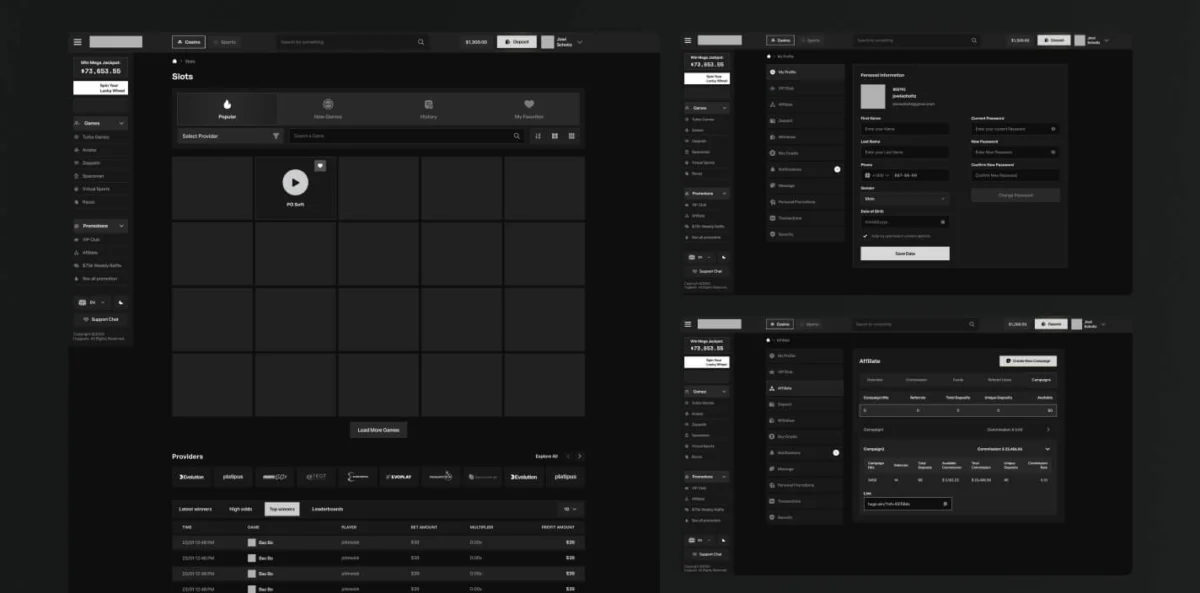
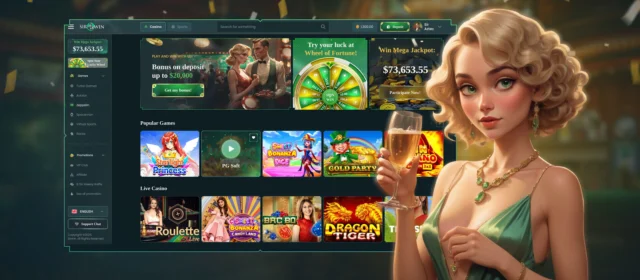
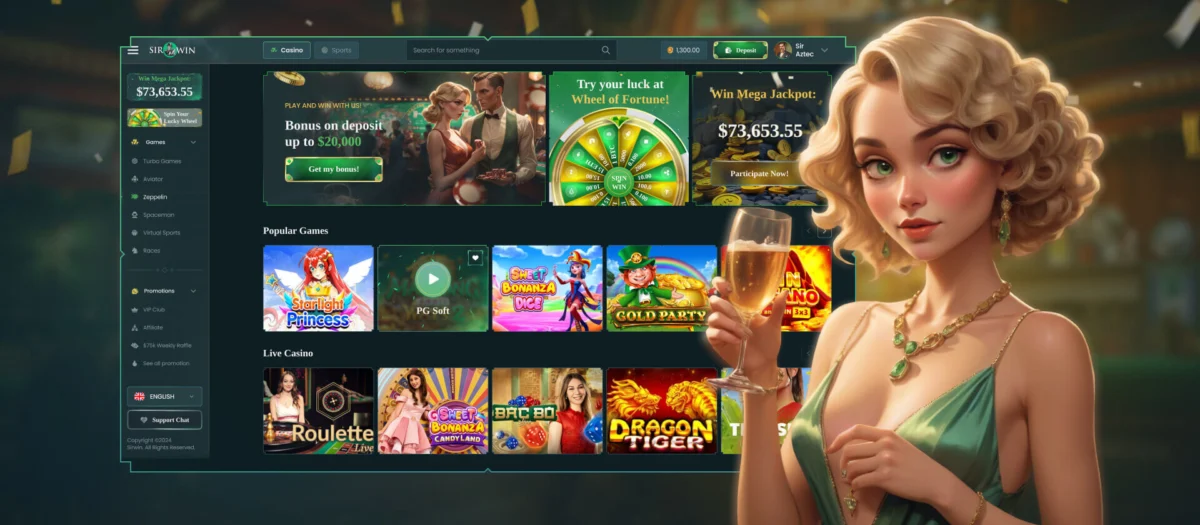
On Sirwin, a casino we designed in a 1920s style, the wireframes alone covered the slots lobby with provider filters, a winners table, the player profile and an affiliate area with campaigns and commissions. Each of those is a separate module in an estimate.
Desktop, mobile and languages
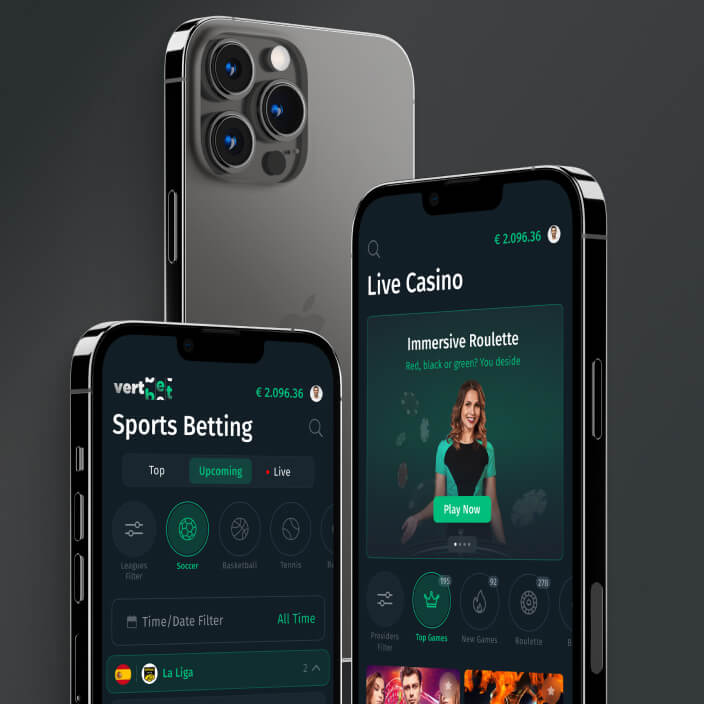
Plan for the phone as a main device, not an adaptation done at the end. Mobile screens are designed as screens of their own: the lobby becomes a set of shortcuts, the cashier has to fit a thumb, the bet slip cannot cover the line. A platform designed for desktop and mobile has roughly two sets of key screens to work through.
Languages and markets add work too. Long German or Ukrainian strings break buttons designed around English, right-to-left languages mirror layouts, and regulated markets add screens of their own, such as setting deposit limits and identity checks.
iGaming design agency pricing: the design system is part of the price
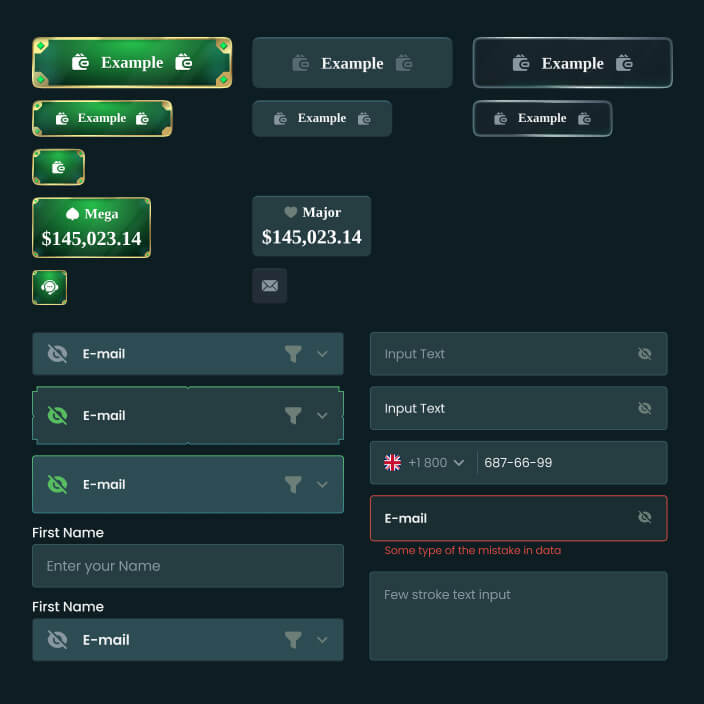
A casino is never finished. New promotions, new providers and new modules arrive every month, so the screens are only half of the job. The other half is the UI kit: buttons, inputs, cards, jackpot counters and every state of them, built as components the team can reuse.
It costs some time at the start, and it is why the next promo page or module takes days instead of weeks. Without it, every new screen is drawn from scratch and slowly drifts away from the rest of the product.
Modules that grow fastest
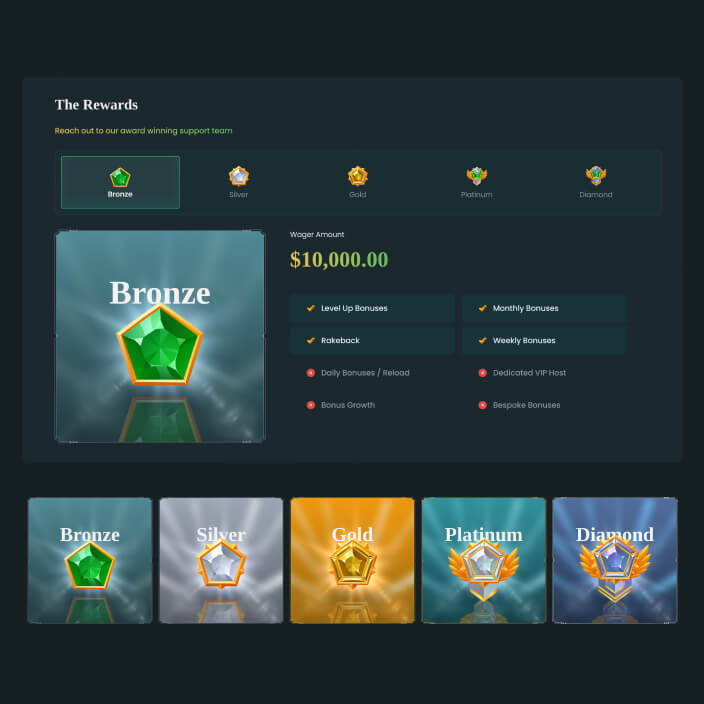
Some modules look small in a brief and turn out large in design. Loyalty is one of them: a VIP programme needs levels, a reward for each level, conditions, progress and the screens where the player sees all of it.
A sportsbook is the other one. Odds change every second, markets get suspended, a bet can be accepted, rejected or partly accepted, and each of those moments needs a designed state. If a sportsbook is in the plan, it is worth estimating it as a separate product. Our sportsbook design page describes what that work covers.
Custom platform or white-label skin
A skin for a white-label casino platform is usually a smaller job than a custom product: the platform typically defines the structure of the screens, and the design work is the brand, the visual style and the components the platform lets you change. A custom platform needs the structure designed from the start, so it sits higher in both price and timeline.
The question to ask before an estimate is how much of the platform’s standard screens you are allowed to change. The answer sets the scope better than any page list.
How the timeline works
Two weeks is the start for a compact scope. A typical project goes through the same steps: brief and audit of the current product, wireframes of the key flows, a visual concept on one or two screens, then the rest of the screens, the UI kit and the handover to developers.
What stretches a timeline is rarely the drawing. It is waiting for content and approvals, modules added halfway through, and decisions about payments or markets made late. A clear module list and one person who can approve the design keep a project close to its estimate.
What to send for an accurate estimate
- The list of modules: casino, live casino, sportsbook, crypto payments, VIP, tournaments, affiliate area.
- Platform: custom development or a white-label provider, and which one.
- Devices and languages: desktop, mobile web, native apps, the list of languages and markets.
- What already exists: a brand book, a logo, a current site, a UI kit.
- Whether you also need branding, banners and creatives, front-end development or ongoing design support after launch.
- The launch date you are working towards.
With that list we can give a price and a timeline instead of a range. If you are not sure where your current product loses players, start with a marketing audit: it shows which modules are worth redesigning first.
Agency or freelancer
iGaming design agency pricing is higher per hour than a freelancer’s, and a freelancer is often cheaper for a single module or a set of promo pages. For a whole platform, the question is whether one person can carry the lobby, the cashier, the sportsbook, mobile and the UI kit to the same standard and on time. In return, an agency brings a team that has designed these modules before, which is what our casino UX/UI design work is built on. You can see the result in our case studies, for example Sirwin and Vertbet.
Frequently asked questions
How much does casino website design cost?
At iDesy, designing a casino platform starts from $5,000. The final price depends on how many features and modules the platform has: lobby and game pages, sign-up and KYC, cashier and wallet, account, bonuses, VIP, tournaments, sportsbook, plus the devices and languages it has to support.
How long does it take to design an online casino?
From two weeks for a compact scope. The timeline grows with the number of modules and depends on how fast content and approvals arrive. Modules added halfway through and late decisions about payments or markets stretch it most.
Why do two casino design quotes differ so much?
Usually because they cover different scopes. A low quote often counts pages and leaves out states such as errors, empty screens, pending verification or a suspended market, the mobile versions and the UI kit. Compare quotes by the module list and what each module includes.
Is a white-label casino skin cheaper than a custom design?
Usually yes. On a white-label casino platform the structure of the screens is usually set by the platform, so the work is the brand, the visual style and the components you are allowed to change. A custom platform needs the structure designed from the start.
Does a sportsbook change the price?
Yes, noticeably. A sportsbook brings line and live screens, event pages, the bet slip, cash out and bet history, each with states for changing odds and suspended markets. It is best estimated as a separate product.
What should I send to get an accurate estimate?
The list of modules, the platform you build on, devices and languages, what already exists (brand book, logo, UI kit), whether you need branding, creatives, front-end or design support after launch, and your target launch date.